What better time than the eve of the imprisonment of Linsday Lohan to look back on the first time I met this maven of unbridled fame, infamy, and absurdity. I don't care to comment on her validity as a "star" or an "actress" or a "sane person." I just think it's time to reflect on the fact that Lindsay couldn't have become the person that she is today alone. Maybe some hard time is what the Long Island gal needs to set her straight, perhaps a quiet dissent into the oblivion of a private life would do. But this is where Lilo is, and this is where I saw it all start out...
The Parent Trap came out when I was 13. Lindsay was a year my junior. We both grew up on Long Island, and due to the sheer magic of geographical proximity we inevitably met one day at the Malibu beach club on the south shore. Although I don't recall who she was with (I'm sure Dina was present) it was palpable that a celebrity was in the vicinity of the pool area after prolonged whispering and excited squeals emanating from every girl my age, and their mothers. At 13 you recognize that famous people are important, and much cooler than you, so of course I shuffled on down to see her in person. What ensued was a disturbing scene and a residual feeling of awfulness that I'll never forget. It was like watching a feeding frenzy. There she was, all red-headed and freckled, just trying to go swimming, while countless kids and parents walked up, ogled, and asked for autographs. Everyone was watching her, and she knew it. I made an executive decision not to bother her like everyone else. But soon enough, she was next to me in the water(!). Not really knowing what else to do, I simply said hi, trying to be cool and above it all, like it was no big thing. Whatevs. So she smiled and went on dodging the people idly staring at her both in and outside the pool. Eventually it was clear that swimming wasn't really going so well for her, so Lindsay was huddled away in a towel and I thought it was all over.
Later on, I stopped at the concession stand for a snack and there she was, trying to remain inconspicuous in line. I was right next to her. It was clear I could take one of two paths; I could tell her how great she was in the super popular movie she was in (that I'd actually never seen) and ask for her autograph, or I could pretend to be very cool and above it all (again) and say hi. I chose the latter, of course--not really acknowledging that it was a flagrant attempt to let her know I wasn't a crazed fan, that I was totally chill with her movie star lifestyle, and that we should definitely hang out. Her response was one of caution and restraint. It was clear she already knew all too well that she couldn't just trust or feel safe around any old person now that she was "known." She smiled politely again and actually said hello. For a second I thought maybe she'd say something else, like, 'hey want to go play?' or, you know, 'let's be best friends forever.' But she walked away instead, and all I could do was feel sorry for her.
I can't say it surprises me that a little girl who couldn't be herself and simply exist like every other kid her age would turn out to have some problems later on down the road. I'm not saying Ms. Lindsay gets to use that as an excuse for reckless behavior, but you'd have to be blind not to see the connections between the her past and present. As much as we have a choice to determine our own destiny, you have to wonder how much of a chance Lindsay really had to be "normal." In addition to her extensive family issues, which have been aired out so publicly it's abysmal, I have to admit that we, the viewing fan-crazed public, didn't help her out much either. Even as a child I could see that everyone wanted something from Lindsay--including me--and she couldn't build anything genuine for herself once she became the exhibit in a celebrity zoo. Even though I think it's irritating for very successful people, a la Kristen Stewart, to complain about the life-sucking vortex of being famous, I sympathize with this Lohan girl. Yes, she could have gotten out and stopped working for good (she did take a break and attempt to go to public high school), but it seems that fickle friend fame is also lucrative, and addictive. It's not hard to imagine why someone would take another movie role (like Mean Girls!) if it's offered to them. It all seems a bit sad and twisted, and in a very insignificant and minuscule way, I was part of it.
So that's my Lilo story. Perhaps it was telling, and perhaps not, but I remember it to this day, and it seems to have made quite the impression on me. Good luck in the slammer Linds, I hope you can say hi and make some friends for once.
Monday, July 19, 2010

Tuesday, July 6, 2010
everything anywhere will kill you at any time

Deceit! Lies!! Fear mongering!!! LOUD NOISES!!!!
Apparently popular blog writers everywhere are taking a dump in a bag, handing it to us, and calling it critical social commentary, and sometimes, journalism. Why? Page views! [read: money] People want to turn a profit by igniting our pavlovian response to click away like jackrabbits. How? By making relatively mundane events or total non-issues into irrational, conspiratorially crafted pieces of yellow journalism, stoking the rage of the people like hot coals.
This piece of sage-like wisdom comes to us from none other than Emily Gould on Slate.com, in which said blogger rips a blog she has recently written for about skewing it's pro-feminist content to both annoying and needlessly reactionary effect to get more hits. In her post, Gould responds to Irin Carmon's Jezebel piece on The Daily Show and it's evil he-man woman haters club. In full discretion, I actually agree with Ms. Gould that the argument of the post was sloppily strung together and it's point poorly (and stupidly) made. But Gould goes further than that. She tears into Jezebel for amping up the tenor of their posts to get a rise out of readers, and in doing so, scrape the profit barrel with more page views, as Jezebel writers' jobs depend on readership. And all the while, Jezebel touts itself as a subversive force against corporate media- it's apparent basis for existing is a penchant for analyzing the practices of TV, mags, and movies in the way they portray and deal with women and their lady issues. Besides the fact that Emily Gould may have her own reasons to burn bridges at Jezebel, she fails to see the connection between Jezebel and nearly every blog out there, including all of the ones she will ever write for; they all have an audience and will invariably garner their content to it.
Has Jezebel gone too far? Have they muscled past the pseudo-journalistic ethical boundaries of a high-traffic site to manipulate the unassuming masses? To argue the journalistic ethics of pop culture commentary via blogs is as useless as making Lindsay Lohan wear an alcohol detection bracelet. If bloggers want to get boozey and wonk-eyed, they're going to do it. Who's to stop them?! And if Gould wants to criticize one site, she is, in effect, criticizing all. Whether considered a news aggregate or not, blogs can appear to hold themselves to a journalistic standard, but in the internet age, almost nothing is sacrosanct. Consider the recent slew of pieces on The Daily Beast letting you know that everything you eat will kill you, even salads! (Burgers will also kill you.) You're welcome.
It seems as if Gould may just be pissed about how much attention Irin Carmon's basically useless, half-baked post got. Jon Stewart got so jazzed up he mentioned it on air, and the female staff members wrote a scathingly funny response. Dear god it's in the Times!
If anything, I call this luck rather than a hostile takeover of media attention. Lots of stupid things get noticed on the internet and end up on the news. Welcome to the way we live now. But the main thing that's being overlooked here is not merely the fact the Gould is feeding off of and perpetuating chatter about Carmon's post, but that she neglects the reality that there are people capable of rational thought clicking on the other side of the screen.
Yellow journalism is not a new concept in American media, nor will accusations of it fail to plague "serious news outlets" trying to stay afloat in the "digital age." But just as Jon Stewart serves up fake news, blogs are free to bust out fake journalism, or as most would designate it, opinion and editorial content, with abandon. The true editors of online content will be the readers. If they get fed up with the content of Jezebel, or any site, that overreaches into the abyss of stupid and irritating content too often, it will eventually fade into irrelevancy. Sometimes this may be difficult to believe, maybe because Perezhilton.com is, inconceivably, still a "relevant" website. But everyone's day will come. The loudest voices may turn heads, but they are the first to burn out. The female Daily Show staffers' response to the Jezebel post makes Carmon's viewpoint look fairly idiotic. Thus, the ship seems to have righted itself from it's listing course on this one. But when the 24 hour news cycle or other newsmedia picks up a bag of turd like this and calls it news, it's on them, and we should hold those outlets accountable for that. Yay internet democracy! [Drew Curtis of Fark.com would fight me on that one]
In the meantime, everyone has to make a living, even people writing on blogs...even Emily Gould! So we're free to keep trying to make inane points and silly conversations matter to someone, anyone, anywhere, at any time. Like right now. Too bad I don't get paid for it...
Wednesday, April 28, 2010
of snarks and softies...
I'm just going to make this clear: I absolutely adore, love, want to smother Richard Lawson of Gawker (and, for a short time, tv.com), in the most unabashedly embarrassing way. His recaps, in all their sprawling fanciful wonderment, bring inappropriate giggles to my face without fail. That said, my darling Mr. Richard unconventionally broke with his snark-filled tone of bemused hilarity and asked his readers to join with him in boycotting the final season of The Hills.
Why, you may ask? Morality, kids. It's about right and wrong, truth and principle!
Now, I don't mean to patronize Richard. But let's consider his reasoning. Along with the impressionable MTV audience that panders to the aspirational tinge of the Hill's brand of "reality," he makes the following impassioned plea:
The Hills used to be kind of a good time — you could make fun of it, dissect the outfits, laugh at the sweeping music and landscape shots. But now... ugh. It's skidded into the realm of grotesque dance macabre. There might not be much to be done about Heidi now. She may be too in the thrall of the terrible fame monster. This might be her life. And that is a genuinely sad thing, for which we may be partly responsible. But we can at least, from here on out, stand on the principle that we won't give them anymore ratings, we won't do them the benefit of making fun of them, we won't keep on with the indulging.
The pretense here is that not only is the Hills seeping into the brains of teen girls, and apparently misguided aunties, it's literally and figuratively disfiguring the pristine tabula rasa that was Heidi Montag. Oh boy...
I have a hard time lending my snark-filled ears on this one. Beyond the fact that Richard is not known for his calls for rational, moral contemplation, I feel that the pot is, well, you know.
We can blame Adam Divello until the end of time for saturating our corneas with the beautiful, styrofoam-brained kids turned pseudo-celeb socialites of California, but can one man a real life pop culture disaster make? I would say no. As a regular recap master for the Hills, and many other "reality" shows, Mr. Lawson makes a living off of pointing out the inane, profane, and simply ridiculous nature of these shows. The cast of the Hills chose to go forth with their mock reality soap opera, regardless of the twisted tales they spun, and the pre-fab antics they carried out for carefully positioned cameras. Everybody was watching, even though reality, it was not.
Perhaps it's because the well manicured mavens of the Hills were simply allowed to stray too far into fake reality land that it was too untenable to expect viewers to stick around. Hence, it's ending! The fact that it's too cartoonish has driven us away. But Richard contends that we are leaving real people by the wayside, namely, Heidi. This big cruel world ripped her from the rainbows and unicorns of TV land, chewed up her brain, and spit her back out as a plastic, pinched Heidi doll. Heidi is not TV's first "character" to publicly break down before our eyes, be it sit-com star, or reality whore (ps, did anyone see Oprah today, Geez Todd Bridges!). She won't be the last. Fame is it's own monster, quoth Lady Gaga, and everyone who wanted in on it should have already known the snake pit they were walking into.
But Mr. Lawson is concerned, and feels that we should be too. It's getting too dark and scary to handle. However, it's not the reality TV game that has turned so cruel, it's simply his opinion that's changed. Instead of being able to mock television, be it reality programming or otherwise, so we can distance ourselves from it and analyze it without getting sucked into its vortex, Rich drank the Kool Aid, along with all of those impressionable, aspirational youngin's he mentions. When your snark goes soft, I believe it's just you, my dear Richard, that needs to turn off the tele and take a deep breath. Your cynicism won't be far behind.
Why, you may ask? Morality, kids. It's about right and wrong, truth and principle!
Now, I don't mean to patronize Richard. But let's consider his reasoning. Along with the impressionable MTV audience that panders to the aspirational tinge of the Hill's brand of "reality," he makes the following impassioned plea:
The Hills used to be kind of a good time — you could make fun of it, dissect the outfits, laugh at the sweeping music and landscape shots. But now... ugh. It's skidded into the realm of grotesque dance macabre. There might not be much to be done about Heidi now. She may be too in the thrall of the terrible fame monster. This might be her life. And that is a genuinely sad thing, for which we may be partly responsible. But we can at least, from here on out, stand on the principle that we won't give them anymore ratings, we won't do them the benefit of making fun of them, we won't keep on with the indulging.
The pretense here is that not only is the Hills seeping into the brains of teen girls, and apparently misguided aunties, it's literally and figuratively disfiguring the pristine tabula rasa that was Heidi Montag. Oh boy...
I have a hard time lending my snark-filled ears on this one. Beyond the fact that Richard is not known for his calls for rational, moral contemplation, I feel that the pot is, well, you know.
We can blame Adam Divello until the end of time for saturating our corneas with the beautiful, styrofoam-brained kids turned pseudo-celeb socialites of California, but can one man a real life pop culture disaster make? I would say no. As a regular recap master for the Hills, and many other "reality" shows, Mr. Lawson makes a living off of pointing out the inane, profane, and simply ridiculous nature of these shows. The cast of the Hills chose to go forth with their mock reality soap opera, regardless of the twisted tales they spun, and the pre-fab antics they carried out for carefully positioned cameras. Everybody was watching, even though reality, it was not.
Perhaps it's because the well manicured mavens of the Hills were simply allowed to stray too far into fake reality land that it was too untenable to expect viewers to stick around. Hence, it's ending! The fact that it's too cartoonish has driven us away. But Richard contends that we are leaving real people by the wayside, namely, Heidi. This big cruel world ripped her from the rainbows and unicorns of TV land, chewed up her brain, and spit her back out as a plastic, pinched Heidi doll. Heidi is not TV's first "character" to publicly break down before our eyes, be it sit-com star, or reality whore (ps, did anyone see Oprah today, Geez Todd Bridges!). She won't be the last. Fame is it's own monster, quoth Lady Gaga, and everyone who wanted in on it should have already known the snake pit they were walking into.
But Mr. Lawson is concerned, and feels that we should be too. It's getting too dark and scary to handle. However, it's not the reality TV game that has turned so cruel, it's simply his opinion that's changed. Instead of being able to mock television, be it reality programming or otherwise, so we can distance ourselves from it and analyze it without getting sucked into its vortex, Rich drank the Kool Aid, along with all of those impressionable, aspirational youngin's he mentions. When your snark goes soft, I believe it's just you, my dear Richard, that needs to turn off the tele and take a deep breath. Your cynicism won't be far behind.
Tuesday, April 6, 2010
This is what happens when you watch 'Intervention' and 'Real Housewives of New York'
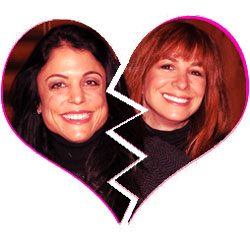 I'm in the process of going through a friend break up. This has happened before in my life, but never on such a deep-seeded level. Recently there have been articles talking about how a friend break up can be just as destructive as the end of a romantic relationship, or even a death in the family. Considering the emotional stress I've gone through to reach the conclusion that I need to leave behind a friendship I've spent so much time to build, that association seems all the more appropriate.
Friendships are an interesting business. If you happened to see the PBS program "This Emotional Life" about how and why we form friendships, it's almost depressing to know how much forming meaningful relationships with others is really just about ourselves. In the end, we are all looking for a way to affirm our self-image or our sense of value and self-worth. Truly altruistic relationships, with no motive for personal gain, are so rare it's almost silly to think our chosen friendships can exist without it. That's not always a bad thing, though. It can actually lead to very positive effects for all involved. But in other instances, this careful balancing act of pursuing our own needs through others while maintaining a functioning relationship can be thrown terribly and disastrously off base.
Like romantic relationships, friendships can be abusive and manipulative. Somewhere along the line, or perhaps even from the outset, the balance of power in a friendship can allow for one party to dominate the other with their actions, emotions, and needs. Not unlike couples in abusive relationships, or friends and family of addicts, co-dependence and periods of ill-fated reasoning and explaining away the corrosive attachments we make to toxic people are realities of imbalanced, unhealthy friendships. There is a sense that with enough effort we can help people change, although, as 'Intervention' teaches us, we don't have the power to change others; they have to be willing and able to change themselves.
I've finally come to realize that I have been battling through a friendship, hoping that if I was earnest enough in my periodic entreaties for my friend to change behavior that either hurt me or allowed her to manipulate and deteriorate our friendship, things could get better between us. For a long time I felt that we could mend all of the hurt we've inflicted on each other over the years. At this point in our lives, this friend is more like family, making it even harder to break away from the long history we have. But this person has also become someone that is harder for me to reason with or talk to civilly about our issues. Most people already know that we can't get through an evening together without rubbing salt into wounds like peevish children. It's like this season of 'Real Housewives of New York,' in which Bethenny and Jill can be friends no more. Everything is just too complicated and toxic and ridiculous and twisted by ego to repair.
I didn't need a TV show to inform me that I was in a bad way, but I needed to align my ailing friendship with co-dependence to see that I'm only hurting myself in hoping that I have the power to change someone else or the choices they make. However, in this case, there are no intervention specialists to guide me. There is no cathartic or poignant way to cut ties or feel vindicated. I think that's what kept me from walking away until now: I wanted my friend to see how wrong she was. But now, I will be in the wrong if I let myself continue trying to keep a sinking ship afloat, drowning my happiness in the process.
And for anyone that saw this, it was heartbreaking for me:
The Real Housewives of New York City - Videos - Relive the Ambush | Bravo TV Official Site
Wednesday, March 10, 2010
we take this song to the grave
Thoreau said that the mass of men lead quiet lives of desperation. Living in New York in your 20's, it's easy to see what he meant. It's a place for dreamers, and a place for said company to see those dreams die a slow and astonishing death before their eyes. Dreams pass away while we wait in hope for some last minute reprieve. A curtain call. A sign. We hope for miracles despite our better judgment. Something to show us the way.
Maybe part of growing up is slowly realizing the illusions you had about where your life would go, about the capacity you had to control your own destiny, were just illusions, while we ignored the warning signs along the way. I am the exception, I am the stand-alone, I am the outlier, we would chant and sway and sing. What experience shows us is that the starlit fantasies of our early twenties, the endless possibilities that we believed to have lain before us, seem more frivolous than any right-minded being would have the courage to admit to themselves. There's a slow and solemn negotiation that we undertake each year that passes, each day that we see the opportunities that shone so bright burn out in the glare of what the day to day truly holds for us.
We dream of independence, creativity, self sufficiency; of something more than we are. We dream of book deals and featured blogs and underground glory. But all we seem to find is less and less to hold on to hope for. Rather than piling up avenues to success with the experiences we gain, we only discover the boundaries and detours. At our weakest moments, we cower to the forces of things too far out of our reach and attempt to consider the alternatives.
But as many times as we tell ourselves that we need to settle, or that we need to accept the way that things really are, the more desperately we cling to the arbitrary hope of our ascension: the Big Break, the moment of truth, or even haphazard luck. The mysterious stuff of youth and desire.
The plain truth is that we can't lose that hope. We'd die without it. But it drags us through the mire and scours us on the worn and well-trodden path of so many before us.
Is it enough to live with our quiet meditations on possibility while we push the rock up the hill again? Is it enough to keep daydreaming while we're wide awake? I often wonder if the things I loved were ultimately successful, stable ventures, would I still feel this lack? Would this sentence I've given myself simply evaporate and leave no record of its stay? If only I didn't know what I know, or find myself wanting what I do...
It's an isolating and solipsistic path that I can't help but follow at every turn, and it only leads me to see my own selfishness and doubt, with nothing to blame but my foolish yearning for something more that what I am and what I'm able to be in the world right now.
I know it's not supposed to be simple. If we didn't struggle and strive for something, what would get us through this day or the next? We would have no song to carry us through to the grave; no pulsing, pounding melody to hum to ourselves all along the way. So many times I feel like I'll never have the chance to sing that song. I'll wonder what would have happened if I only had the chance. And that is the most heartbreaking part of it all, because all I really have to do is sing it, even if no one is there to listen. There are just these moments when I'm all too aware of the silence that could follow.
Maybe part of growing up is slowly realizing the illusions you had about where your life would go, about the capacity you had to control your own destiny, were just illusions, while we ignored the warning signs along the way. I am the exception, I am the stand-alone, I am the outlier, we would chant and sway and sing. What experience shows us is that the starlit fantasies of our early twenties, the endless possibilities that we believed to have lain before us, seem more frivolous than any right-minded being would have the courage to admit to themselves. There's a slow and solemn negotiation that we undertake each year that passes, each day that we see the opportunities that shone so bright burn out in the glare of what the day to day truly holds for us.
We dream of independence, creativity, self sufficiency; of something more than we are. We dream of book deals and featured blogs and underground glory. But all we seem to find is less and less to hold on to hope for. Rather than piling up avenues to success with the experiences we gain, we only discover the boundaries and detours. At our weakest moments, we cower to the forces of things too far out of our reach and attempt to consider the alternatives.
But as many times as we tell ourselves that we need to settle, or that we need to accept the way that things really are, the more desperately we cling to the arbitrary hope of our ascension: the Big Break, the moment of truth, or even haphazard luck. The mysterious stuff of youth and desire.
The plain truth is that we can't lose that hope. We'd die without it. But it drags us through the mire and scours us on the worn and well-trodden path of so many before us.
Is it enough to live with our quiet meditations on possibility while we push the rock up the hill again? Is it enough to keep daydreaming while we're wide awake? I often wonder if the things I loved were ultimately successful, stable ventures, would I still feel this lack? Would this sentence I've given myself simply evaporate and leave no record of its stay? If only I didn't know what I know, or find myself wanting what I do...
It's an isolating and solipsistic path that I can't help but follow at every turn, and it only leads me to see my own selfishness and doubt, with nothing to blame but my foolish yearning for something more that what I am and what I'm able to be in the world right now.
I know it's not supposed to be simple. If we didn't struggle and strive for something, what would get us through this day or the next? We would have no song to carry us through to the grave; no pulsing, pounding melody to hum to ourselves all along the way. So many times I feel like I'll never have the chance to sing that song. I'll wonder what would have happened if I only had the chance. And that is the most heartbreaking part of it all, because all I really have to do is sing it, even if no one is there to listen. There are just these moments when I'm all too aware of the silence that could follow.
Monday, February 22, 2010
medical dramas screw with my sense of reality

Expectations are not always easy to manage. Sometimes you get into a situation hoping for one thing, but getting another. It happens. But when years of television melodrama start to temper your expectations of the medical field, it's time to kick yourself in the ass.
Let me preface this schpiel with a little disclaimer; I'm not a complete idiot (usually). I understand that television in general has very little to do with any person's actual life, or how people behave in real-life situations. But let's just get to it...
So after a night of fun at Atlantic City last weekend I left the Jersey Shore with what appeared to be a bug bite on my right wrist. Long story short, within a day my hand swelled to a very painful extent and it was clear the emergency room was my only option. After 2 separate trips to the emergency room and an overnight stay in the hospital, I came to an important conclusion: hospitals are neither sexy, nor dramatic, nor inspired locales of curative and provocative wonder. Beyond this somewhat obvious sentiment for anyone who spends time in hospitals (I don't), I was shocked to find how disappointed I was in my caregivers, those supposed navigators of choppy medical waters, my lifeboats sent to delivery me to safer shores. My doctors were not wildly emotional, slutty, sentimental, or even power driven. There were no intermittent speeches about patients and cures and careers delivered at the optimal moment to relay important character traits of the sick and of the healers.
What I needed was a Dr. House to diagnose the freakish swelling of my hand by seeing into my soul with acute observations of nearly imperceptible physical/psychological cues. What I expected were people who were too busy to be bothered because they were occupied with trivialities, but in the end were certain and sure of themselves as doctors (more like a Grey's anatomy without the sex). Scrubs was out of the question from the start. What I got were bored and sometimes agitated people who were itching to reach the mot easily identifiable diagnosis to get me out of the way so they could keep complaining about procedural headaches. No one seemed to agree on anything, which you could say is typical TV drama, but the difference was no one cared that they didn't have the answer. It was easier to assume I was lying about how my hand started to swell (a fist fight was suggested more than once) because it got them to a conclusion faster. It was all guess work in the end. Thankfully, I'm alright and almost back to normal, but I was reminded that doctors do not get to rise above it all like the people on TV. They are the people we went to high school and college with who did stupid shit on the weekends. They get peeved about work just like us. Simply being knowledgeable in the medical field does not make someone inspired, right, or trustworthy, but then again, the title of Doctor is supposed to lead us to think these things.
I think TV, in a small way, helps us believe that Dr. House exists somewhere, and that an Izzie Stephens would fight for our needs. It's an overblown lie and we know it. It's probably more damaging to the doctors in the end; they have to deal with that kind of foolish disappointment. The silly thing is, I never really thought about my unchecked delusion until I had to spend time in a hospital. But my guess is that the writers of these shows are banking on that kind of shared desire; the hope to run into George Clooney in an emergency room that keeps people coming back for more.
Oh television, you are a wonder.
Tuesday, February 9, 2010
snow falling on sensibility

What is it about our white flaky friend snow that makes everyone insane? Yes, massive accumulations of snow make life inconvenient and, sometimes, awfully so for the unlucky sitting ducks who lose power and all connection to the outside world. Yes, it's costly for our state and local governments, and also pretty...at first. But why snowpocalypse now?
More than anything, it's all a grown-up version of childhood excitement, only perverted by our silly jobs and responsibilities. If we had nowhere to go tomorrow morning, we would be as happy as icy, snow-covered clams right now. If we didn't have to shovel, we would look forward to a day of snow angels and sledding. If we didn't have to worry about the car starting, we would gladly await a snow-packed stroll. Right?
Growing up means that we have to leave childish things behind, and in doing so, we sometimes forget the magic we attributed to something as simple as fluffy white precipitation. It granted us freedom from a day of school. It let us sleep in and drink hot chocolate while watching the Price is Right. It was a holiday from reality. Now, all snow seems to do is remind us of how much reality sucks.
Knowing that I am expected to go to work tomorrow makes me inclined to dread the looming morn of snowy doom. And as much as I try to get back to my elementary school mind frame, all I can think about it what will go wrong, not the glorious, routine-freeing possibilities of a whiteout. I guess I can see why that would make a collective population predict the demise of it's existence for a day or two; because trudging through the slush only to end up in an office cubicle can pretty much feel like the end of the freakin world. Or, as some might say, snowmageddon.
Subscribe to:
Posts (Atom)